Curcumin Absorption and Bioavailability: 6 Key Factors That Truly Matter
Introduction
Curcumin is widely discussed in the wellness space, yet one crucial aspect is often misunderstood: absorption. Simply consuming curcumin does not guarantee that the body can effectively utilize it. Understanding curcumin absorption and bioavailability is essential when evaluating supplements or ingredient formulations.
This guide explains the key factors that influence how curcumin is absorbed—without medical claims or exaggeration. Understanding curcumin absorption and bioavailability is essential for anyone looking to evaluate ingredient quality beyond surface-level claims.
What Does Bioavailability Mean?
Bioavailability refers to the proportion of a compound that enters circulation and can be used by the body. In simple terms, curcumin absorption and bioavailability determine how much of the consumed compound can actually be used by the body.
Curcumin naturally has low bioavailability, meaning only a small fraction is absorbed without formulation support. For a detailed scientific overview of curcumin bioavailability, refer to curcumin bioavailability data published by PubChem.
Why Curcumin Is Difficult to Absorb
Curcumin faces three main challenges:
- Poor water solubility
- Rapid metabolism
- Quick elimination from the body
These factors explain why formulation matters more than raw dosage.
How the Body Processes Curcumin
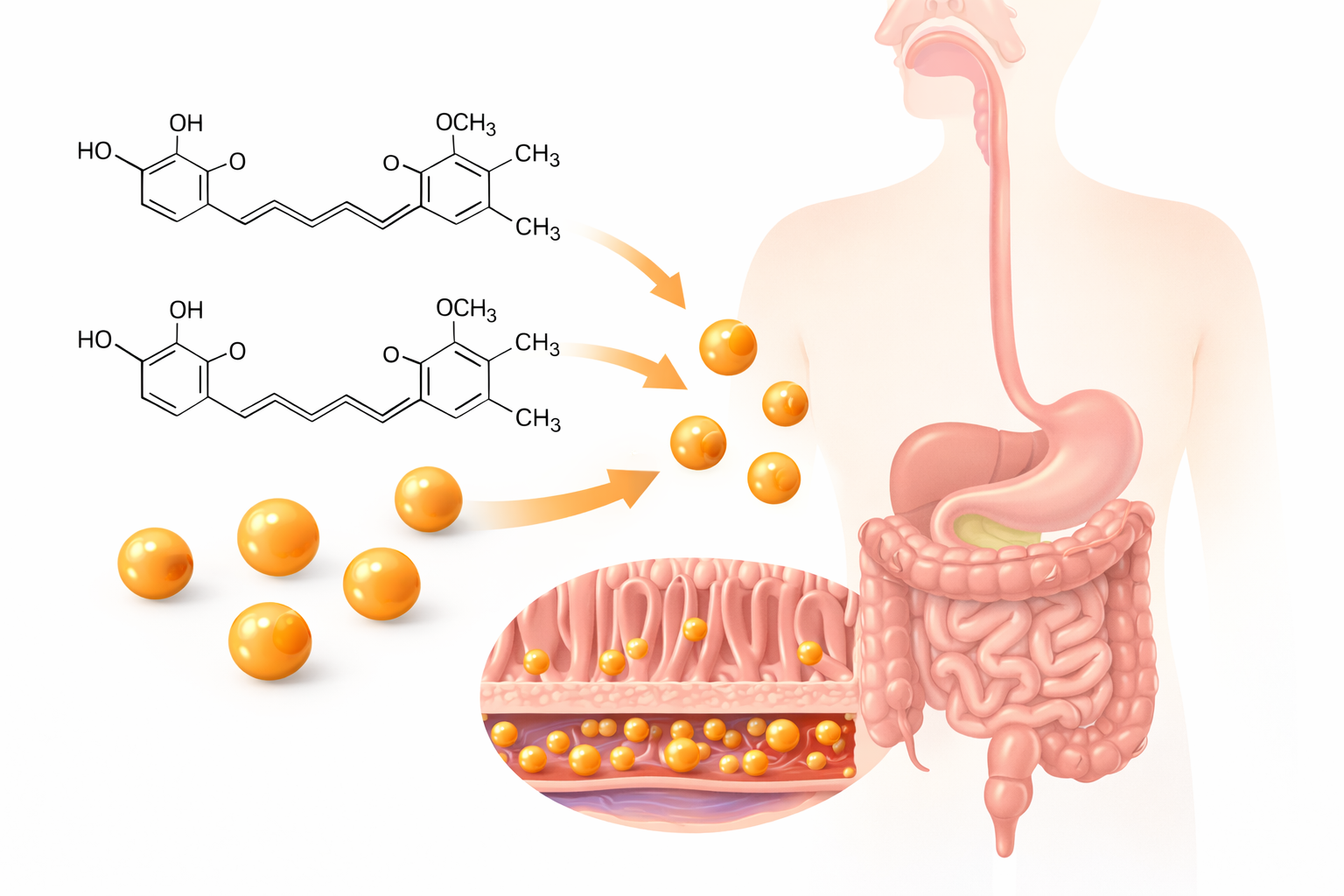
After ingestion, curcumin passes through the digestive system where several factors influence how much of it becomes available for use. Due to its poor water solubility, a significant portion is not absorbed efficiently and is quickly metabolized by the liver. This rapid breakdown explains why raw curcumin intake often results in low systemic availability.
Formulation strategies aim to slow this process, allowing curcumin to remain in circulation longer. Understanding this biological pathway helps explain why absorption support is often emphasized when evaluating curcumin-based supplements.
Why Absorption Quality Matters More Than Dosage
A common misconception is that higher curcumin dosage automatically leads to better effectiveness. In reality, absorption quality often plays a more significant role than sheer quantity. A lower dose with proper formulation may provide more usable curcumin than a high dose without absorption support.
This distinction is especially important for readers comparing ingredient labels. Instead of focusing solely on milligram counts, evaluating how curcumin is delivered and supported can offer a clearer picture of formulation quality.
This perspective encourages readers to look beyond marketing claims and focus on formulation quality. By understanding absorption principles, it becomes easier to evaluate ingredient lists and avoid misleading assumptions based solely on dosage numbers.
6 Key Factors That Affect Curcumin Absorption
1. Black Pepper Extract (Piperine)
Piperine is commonly added to curcumin supplements to enhance absorption by slowing metabolism.
2. Lipid-Based Formulas
Curcumin is fat-soluble, meaning it absorbs better when paired with oils or lipids.
3. Standardization of Curcuminoids
Standardized extracts ensure consistent curcumin content.
4. Delivery Technology
Some formulations use advanced delivery systems designed to improve stability.
5. Dosage Splitting
Smaller doses taken throughout the day may improve utilization.
6. Ingredient Transparency
Clear labeling helps users understand what they are consuming.
Why Absorption Matters When Choosing Supplements
When comparing options, absorption support often separates basic formulas from higher-quality ones.
👉 For practical examples, see our detailed comparison of
best curcumin supplements for inflammation
Curcumin vs Food Sources
.Although turmeric contains curcumin naturally, the concentration and absorption from food alone remain limited. This is because turmeric root contains only small amounts of curcumin, as explained by the National Center for Complementary and Integrative Health.
For a full explanation of the difference, read:
Curcumin vs Turmeric: What’s the Real Difference?
Frequently Asked Questions (FAQ)
Does black pepper really improve curcumin absorption?
It is commonly used to support absorption in supplement formulations.
Is higher dosage always better?
Not necessarily. Formulation quality often matters more than raw dosage.
Can curcumin be absorbed without enhancers?
Absorption is possible, but significantly lower.
Conclusion
A clear understanding of curcumin absorption and bioavailability allows readers to assess supplement formulations more objectively and avoid misleading comparisons.
Understanding curcumin absorption and bioavailability allows for more informed supplement evaluation. Ingredient quality, formulation strategy, and transparency all play a role in how curcumin is utilized.
⭐ Overall Educational Value Rating: 4.7 / 5