Curcumin vs Turmeric: 5 Essential Differences That Really Matter
Introduction
Many people searching for natural ways to support overall wellness often come across turmeric and curcumin. While these two terms are frequently used interchangeably, they are not the same. Understanding the difference between curcumin vs turmeric is essential before choosing supplements or dietary options, especially if you’re looking for better ingredient transparency and absorption support.
This guide breaks down the differences in a clear, evidence-informed way—without medical claims or exaggeration.
What Is Turmeric?
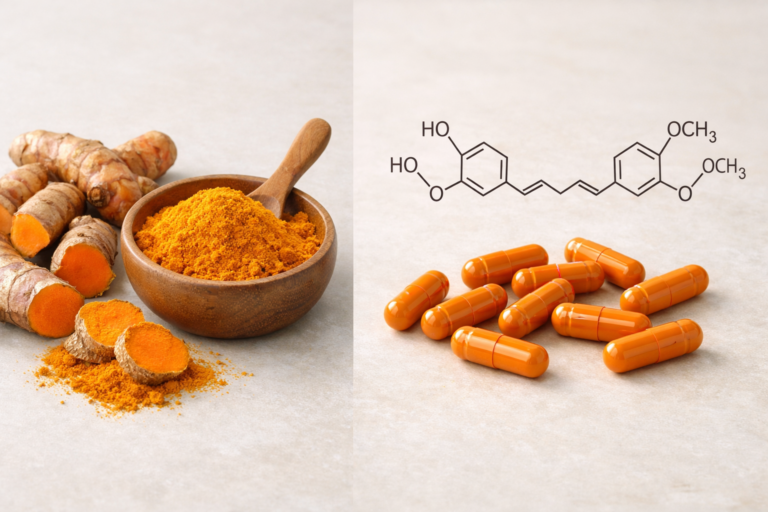
Turmeric is a bright yellow spice derived from the root of the Curcuma longa plant. It has been traditionally used in cooking and cultural practices for centuries.
Key characteristics of turmeric:
- A whole plant ingredient
- Naturally contains curcuminoids
- Curcumin makes up only about 2–5% of turmeric powder
- Commonly used in food and beverages
Turmeric on its own is not concentrated, which is why supplements often focus on curcumin instead.
What Is Curcumin?
Curcumin is the primary active compound found within turmeric. It is the component most often studied for its general wellness-supporting properties.
H2: 5 Key Differences Between Curcumin and Turmeric
Curcumin and turmeric are closely related, but they differ in several essential ways that directly affect how they are used and why people choose one over the other.
1. Source
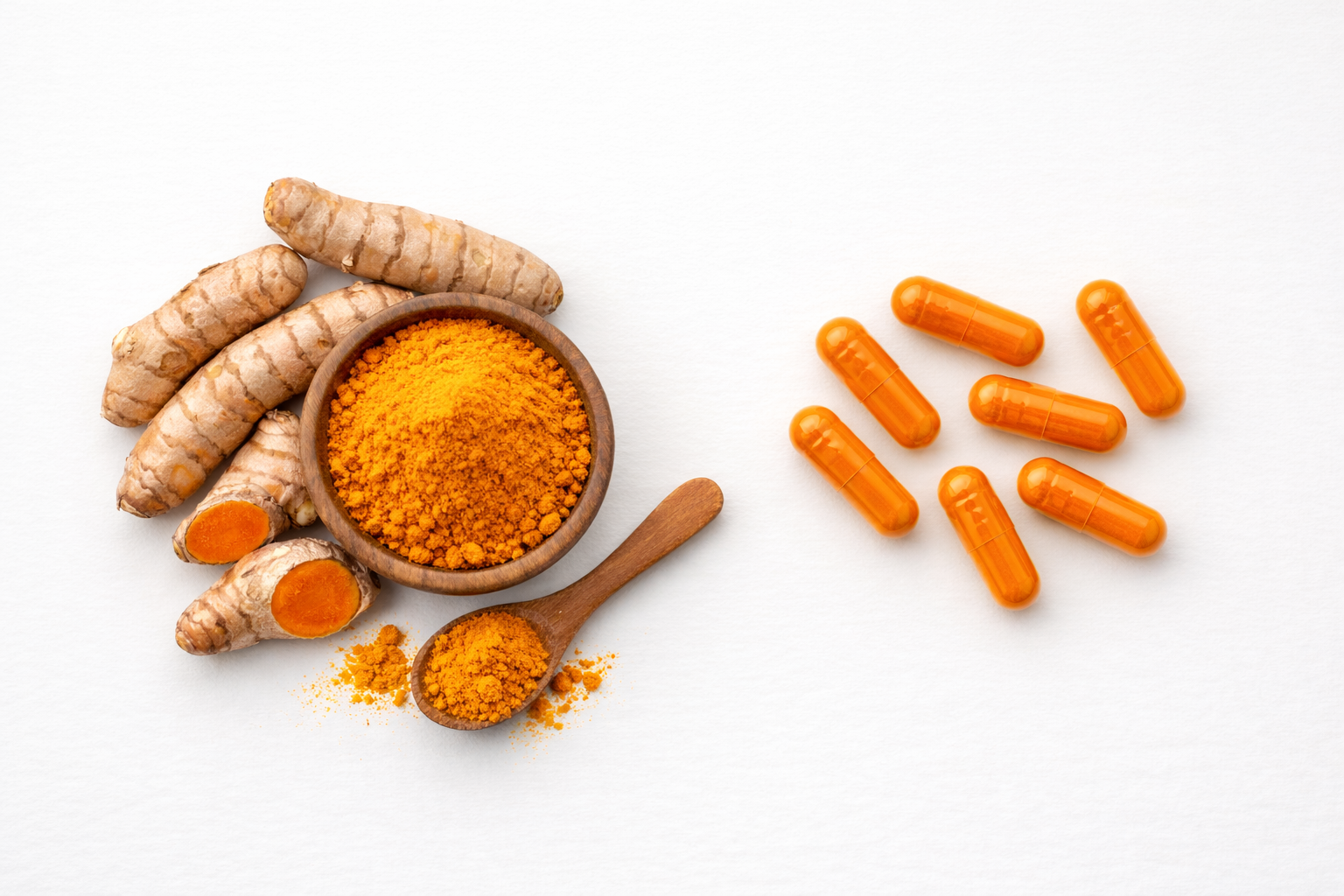
Turmeric is the whole root of the Curcuma longa plant, while curcumin is a specific active compound extracted from turmeric.
2. Curcumin Concentration
Turmeric naturally contains only about 2–5% curcumin, whereas curcumin supplements are standardized to deliver a much higher and more consistent amount.
3. Typical Use
Turmeric is commonly used in cooking and food preparation, while curcumin is primarily used in dietary supplements.
4. Absorption
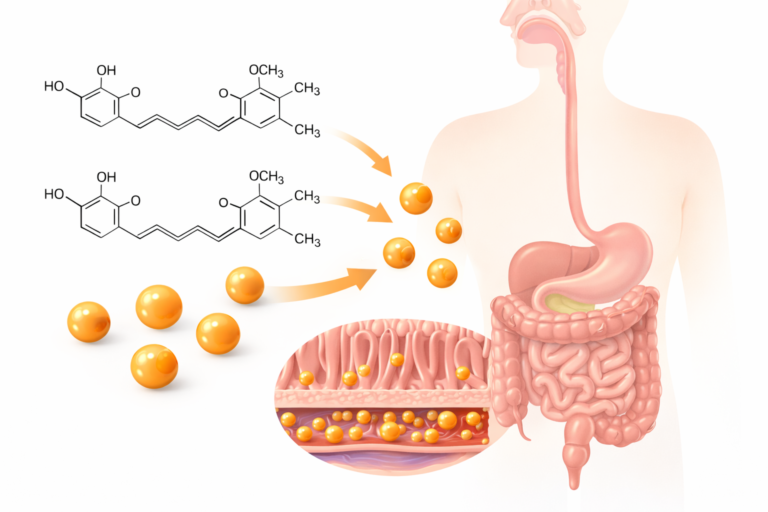
Curcumin has low natural bioavailability. For this reason, many supplements include absorption enhancers such as black pepper extract.
5. Purpose of Use
Turmeric is often part of a general lifestyle or dietary choice, while curcumin supplements are selected by those looking for a more targeted formulation.
Why Absorption Matters
One major challenge with curcumin is low natural bioavailability. This means the body does not easily absorb it on its own.
To address this, many curcumin supplements include:
- Black pepper extract (piperine)
- Specialized delivery systems
- Lipid-based carriers
👉 For a practical example, see our in-depth guide on
best curcumin supplements for inflammation
Curcumin vs Turmeric in Daily Use
In everyday life, turmeric and curcumin serve different roles. Turmeric is easily incorporated into meals, teas, and traditional recipes, making it accessible for regular dietary use. However, the amount of curcumin obtained through food alone remains relatively low.
Curcumin supplements, on the other hand, are designed for consistency and precision. They provide standardized doses and often include additional ingredients to support absorption. This distinction explains why many people choose turmeric for culinary purposes while considering curcumin supplements when evaluating ingredient-focused wellness options.
Which One Should You Choose?
Choosing between curcumin vs turmeric depends on your goals:
- Turmeric may be suitable for general dietary use
- Curcumin supplements may be preferred for those seeking concentrated formulas with absorption support
When comparing options, always review ingredient transparency and formulation quality.
Buying Guide — What to Look For
When comparing the best curcumin supplements for inflammation, absorption support, ingredient transparency, and brand reputation are the most important factors to consider.
Key points:
- Standardized curcumin content
- Presence of black pepper extract
- Clear labeling
- Third-party quality testing
Frequently Asked Questions (FAQ)
Is curcumin the same as turmeric?
No. Curcumin is an active compound found within turmeric, but turmeric contains many other components.
Why do supplements focus on curcumin?
Because it is the most studied compound and can be standardized in supplements.
Does turmeric contain curcumin naturally?
Yes, but in small amounts.
Is black pepper extract important?
It may help improve curcumin absorption
H2: Final Thoughts
Understanding the difference between curcumin vs turmeric helps you make more informed wellness decisions. Both have their place, but supplements often rely on curcumin for consistency and formulation control.
⭐ Overall Educational Value Rating: 4.6 / 5